Ruminations From the Western Slope

Ruminations From the Western Slope
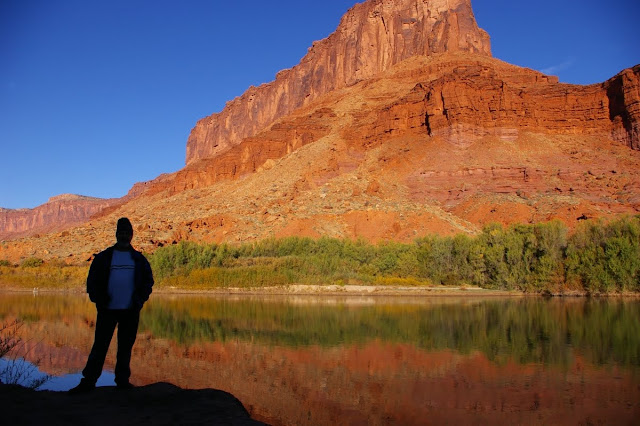
Colorado River near Moab, Utah

Wednesday, June 27, 2012

DAUGHTERS


In my office at home is a framed photograph of my daughter Alison at age two looking straight out at the world with dark eyes and a steely gaze that says “I am ready for whatever the world wants to throw my way.”  The black & white photo was taken by my then father-in-law Hank Fagliano who somehow captured, in that one moment, the personality and nature that was to develop in this child who was born on Beethoven’s birthday.

I was 35 years old when she was born and more than ready to take on the responsibilities of fatherdom. In those early years Ali, her mom and I lived in a remote farmhouse on Tomales Point about 18 miles away from the headquarters of Pt. Reyes National Seashore where I worked.  It was an isolated existence that didn’t always agree with us but it gave my daughter and I plenty of opportunities to wander the headlands, explore the old farm buildings, feed the chickens, and share in a somewhat idyllic childhood.  The imprint of that time period still sits fondly with both of us.

In time there was the move to Arizona, the marital upheaval, the gut-wrenching separation that would bring all of us back to Northern California.  And thereafter the desperate custody weekends when Ali and I would cram every minute with father/daughter activities and moments.  Then, before long, high school.  Athletics. College.  Independence The graduation into adulthood.  And now, a much anticipated marriage at the end of this summer.

On top of our piano is another photograph of me with my other daughter Lindsay.  She is sitting against me and I am sitting against a sandstone wall in an alcove on the Paria Plateau. I was nearly 50 when she was born on the same birth date as Groucho Marx.  She became a reader.  A talker.  An effervescent cultivator of nerdism.  An academic whiz. A lover of eclectic lists. There has been no marital upheaval in her life so I’ve been able to experience parent nights at school, band concerts, camping trips, her funny friends..  She understands that we are older than most of her peers’ parents so that may explain why she treats us with so much kindness and love.

Neither daughter has been the typical “out of control” teenager in spite of countless admonitions and doom & gloom forecasts from others.  Both have been happy to forge ahead and establish their identities, free from coercion and with minimal guidance.  Both have given me love, hope and courage and a reason to believe in the future.  They are my friends.  My heroines.  My daughters.

Thursday, May 31, 2012

The Carrizo Plain and Simple


The Carrizo Plain is a stark and lonely piece of primal California, bereft of any perennial water and riven by the San Andreas Fault.  It sits about 40 miles west of Bakersfield and about 30 miles east of San Luis Obispo, splayed out in a north-south orientation between the inner-coastal Caliente Mountains and the torn and fractured Temblor Range.  It is not a terribly sexy destination.  It is not bound to attract hordes of tourists.  And it lacks almost any amenities for the weary traveler.  And therein lays its austere charm.

While most of the Central Valley was being drained, chained and plowed under in the late 19th and early 20th century, the Carrizo presented a challenge to even the most hardened homesteader.  It was extremely isolated. There were no permanent streams; only seasonal alkali lakes.  There were no trees;   only wiry shrubs on the surrounding hills.  In a good year there might be enough grass and forage for a small herd of cattle.  In a dry year, the Plain would become a desert.   Today the weathered remains of a few farm houses and barns attest to the failure of men to wrest control of the landscape from hostile elements.  And that may have been what saved it.

In this lost remnant of a once fecund valley system, the kit fox and giant kangaroo rat survived.  Native wildflowers held their ground.   The native Chumash saw it as a place of power and beauty, and held it sacred.  And all the while, the steady grinding of tectonic plates literally carved the nearby mountains.  Even before the 50-mile long valley became a National Monument in 2001, I was intrigued by what I’d heard about the place.  First, there were the aerial photographs of a very visible fault line and offset stream beds. Then, sometime in the 1990s the Nature Conservancy acquired most of the area and it became available to the public at large.  And then the feds took it over.

As a native Californian, it seemed like I owed myself the opportunity to personally visit the area which I did in the spring of 2010, as documented in an earlier blog http://redmesacafe.blogspot.com/2010_03_01_archive.html#).  It had been a wet spring and the mid-March landscape was covered in wildflowers and green grasses.  That experience ended up exceeding my expectations.  But when I returned to the Carrizo this last March, the mood was decidedly different.  The winter rains had never really come.  There were hardly any flowers.  And what grass I could find was pretty stunted.  Nevertheless, the magnificent emptiness worked its magic on me.  The campgrounds were empty.  The vistas were vast.  And quiet lay over the landscape like a soft blanket.

Places like the Carrizo Plain will never be tourist meccas, and we can be grateful for that.  What we have, instead, is a pocket of old California, protected for its own sake.  Whether you care to see it or not, it is 250,000 acres of open space not open to farming or oil and gas extraction.  It is a place where a person can stand on a hill overlooking miles of nearly-forgotten country and feel absolutely alone and full at the same time.

Monday, April 23, 2012

House of the Rising Son


The house that I was born and raised in is one of hundreds of similar post-war homes lining the low hills of San Francisco’s Sunset District.  Out there near the corner of 45th and Vicente, we were only three blocks from the Pacific Ocean and even closer to the Fleischacker Zoo.  Actual sunsets though were a bit of an anomaly as the fog was pervasive along the avenues.  My family moved down to the sunnier Peninsula in 1954 where I was much happier in the heat and the suburban life.
Over the years, however, I would occasionally find myself in San Francisco and would drive by the old stucco house.  When we lived there it was painted white with a green trim.  Later it was painted a sort of coffee color.  Now it is painted smoky gray like the dominant coastal weather pattern.  I know this because I happened to stop by for a look about a month ago. I parked the car right in front of the house and just sat there for several minutes contemplating my journey from a bouncing baby on the edge of the west coast to an aging boomer on the western edge of Colorado.
As I sat there, a young Asian man came out of the house and down the red brick steps. He was getting into his car when I decided to make my presence known.  So I introduced myself and told him about my personal history with his house.  He was friendly and a bit astonished and, after a few minutes, asked me if I’d like to see the inside of the house…and meet his 109-year old grandmother!  Naturally, I said yes.
The next several minutes were surreal.  First the walk up those red brick steps.  Then into the house itself where the primal memory kicked in.  In a rush of emotions, I was introduced to the aforementioned grandmother (who spoke no English), and to the mother who owned the house and had lived there for 30 years since emigrating from Taiwan. Then a quick tour of the house which, unbelievably, was almost exactly as I remembered it….though smaller now, of course.  The plain, square living room in front with plate glass window overlooking the avenue.  The sunny kitchen with high ceiling to the right.  Small hallway with skylit bathroom to the left, and two medium sized bedrooms in the back.  The one on the left was the one I shared with my sister.
An unexpected rush of emotion overcame me and I found myself choking up. It had been 58 years since I’d last been inside this house.  This is where I had learned to walk and talk.  Learned to read.  Watched television for the first time on the family Philco.  And here was this gracious Taiwanese family allowing a complete stranger to enter their abode and spend a few minutes catching up on a distant past.  I thanked them profusely and then headed back down those brick steps which had felt my toddler feet, my parents’ young steps, and the footfalls of so many others.
When I headed back down the road again, driving along the Great Highway, I knew I had been given an extraordinary opportunity to connect the dots of time, and to recapture for just a few moments another piece of my past.

Sunday, March 18, 2012

The Road Into and Out of Las Vegas


Las Vegas, Nevada was an interesting pullout on my professional career path and on my personal road as well. The city had never been on my road map of places to move to but rather to move through. Yet I moved my family there in the late 90s to get away from an abusive job situation in Albuquerque, New Mexico and to pursue a new career with the Bureau of Land Management. I was moving from a situation where I’d hated my job but loved the area where we lived, to a place where I would love my job but would always feel uneasy about our living situation.

The job was glorious. Chief of Visitor Services for Red Rock Canyon National Conservation Area, a miniature Zion just to the west of the city. An Eden in the Mojave. And a stepping stone to a top management position. But in order to work at Red Rock, we had to live in Las Vegas. We found a decent place in a 1970s neighborhood on the west side of town, just off of Interstate 95. We could hear the constant drone of the freeway from our house, but within just a few blocks we had access to just about every franchise and big box store imaginable. People moved in and out of the neighborhood all the time so we never really got to know our neighbors very well. But we had a glut of amenities.

All in all, it was never a very good fit. With the exception of Red Rock, it was a real chore getting out of the city to any decent open space. And there was no historic charm anywhere in Vegas, unless you count the old casinos on Fremont Street. There was also the horrible traffic, the bad air, and the omnipresent slot machines in every Walgreen’s and Safeway. There was the feeling that the city was constantly on the move whether you were on board or not. And each week, as I drove out to the cliffs of Red Rock, I would see more and more desert being gobbled up by development. We would leave town for two weeks on vacation and when we came back there would be entire new neighborhoods of faux Spanish style houses and sound walls erected. And maybe a new strip mall or two.

It was impossible to have a decent garden on our property since most of the western part of the city is built on sterile alluvium. And the summer heat was even too oppressive for this sun worshipper. The best thing about living in Las Vegas was that southwestern Utah was only two hours away. Still, there were moments. Quiet ones mostly in hidden canyons or springs. We found a nice, co-op type preschool for Lindsay to attend. We enjoyed shopping at Trader Joes. And there was the one afternoon when I was driving back to town from the Valley of Fire State Park along the winding North Shore Drive of Lake Mead. And Louis Armstrong was playing West End Blues on the radio as I navigated around Joshua tree- studded buttes and red clay washes. The sun was low in the sky and, at that moment, it was the most beautiful piece of music I’d ever heard in a most beautiful stretch of desert.

Our stay in Las Vegas was mercifully short – less than three years. When it came time to leave, we practically drove out ahead of the moving van and didn’t stop until we were just outside of St. George, Utah. Still, had we not lived there and experienced that strange and improbable environment, we might not have ended up here where nearly everything fits just right.

Friday, February 24, 2012

Who Knows Where the Time Goes?

Last night’s Judy Collins concert at the Avalon was, for me, another one of life's little connecting consequences that bring us from one point to another. The last time I saw Ms. Collins in concert was when I snapped this photograph of her on February 14, 1969 somewhere in the San Jose area. I was not yet twenty-two and she was probably in her late 20s at that time having just released the "Who Knows Where the Time Goes?" LP. At that time the chances are that I was without a source of income of any kind, had very long hair, and was high on something. And, of course, I was stoked on this beautiful woman folk singer who, just months before, had unwittingly gotten me through a bad acid trip.

That previous summer my friend Stan and I had elected to drop some acid at his house while his folks were gone for the weekend. Stan had done the deed first by himself and then, in a fit of anxiety, had called me up to come over and help him through it. But by the time I got to his house, Stan was pretty much in control of things again. Nevertheless, wanting to share in his experience, I decided that I should drop too. So I did. And at first it was pretty wild and fun. But after the fun and games subsided, the anxiety set in and the walls of his house started to close in on me and I was well on my way into a bad trip. Things seemed sinister and strange and I got to feeling even worse. So the two of us repaired to Stan's backyard.

That helped a little bit, but what really got me through the ordeal was shortly thereafter when we came back into the house, turned on the TV, and the Smothers Brothers' replacement summer show with Glen Campbell was on. Judy Collins was the featured guest. She came out all dressed in white and started singing Joni Mitchell's Chelsea Morning and, at that moment, it was the most beautiful thing I had ever heard. And I completely put my anxiety and fear aside, and was just riveted to the music and the lovely sight of this woman singing out with all her heart. From then on, the rest of the evening went really well and I always felt thereafter that she had somehow gotten me through my bad trip.

So there we were last night in the old Avalon Theatre, the very same place where thirty-five years earlier I saw Star Wars for the first time as a young backcountry ranger from Canyonlands. And I had seen this same woman almost forty-three years earlier to the day, singing on a cool February night in the Bay Area. She broke into song and her voice reverberated through that classic edifice of Grand Junction and I was immediately thrown into a veritable maelstrom of thoughts, remembrances, and heartfelt emotions. Her hair is all gray now, of course, but she still wears it long, and still has that strong, incredible voice that somehow pulls together all those years and all of those changes.

And she has connections too. She grew up in Denver. Came over to Grand Junction with her folks as a child to buy fresh fruit for her mother to can. So I sat there like some cosmic observer, trying to fit all the pieces together and feeling a kind of peace and perspective, and a warm re-visitation of the past. In this day and age, it seems more and more like these kinds of connections are what really count for me. These strands of memory and experience and relationship that are all tied together somehow mean so much more to me than the day-to-day meaningless media drivel of fear, anger and despair.

When we walked back out into the cool February air of western Colorado I was once again reinforced as to why I am here and why I love this place so much. Money and time well spent, I would have to say.

Monday, February 20, 2012

A Shameless Plug

The older I get, the more fascination I seem to have for old paper or, as it is often referred to, ephemera. It started out with old books which I have collected for quite a long time. That interest grew to include pulp paperbacks which I have expounded upon in a previous blog. But now I find myself inundated in vintage magazines, postcards, train schedules, posters, old catalogs, ticket stubs, autographed photos, and dozens of other oddities from “back in the day”. I cannot really explain the interest other than the old saw that these pieces of paper are from “an older and simpler time.” That may or may not be true, nevertheless they are often quaint, artistic, and revealing of the social and cultural mores of the day.

For instance, a write-up in a 1924 Victor Record catalog says of a contemporary fox trot “light and graceful in style, incentives to good dancing but with enough jollity for the carefree sort.” A 1938 issue of The National Republic admonishes against “The Enemy Within Our Gates” (communists). A cover from a 1930s issue of Popular Mechanics shows fanciful aircraft of the future while the articles inside hint at the possibility of impending war. These are all time capsules of a sort and items that I find it hard to get rid of. Nevertheless, I have recently established a website - http://westslopebooks.ecrater.com - for just such a purpose. So if you are interested in the wonderful world of weird paper, you might want to check it out. You too could get hooked.

Wednesday, January 25, 2012

The Vagabond Days

“And it’s a hitchhike a hundred miles. I’m a rag-a-muffin child.” – Paul Simon, Cloudy

There was a period of time in my life, roughly from 1967 through 1970, when hitchhiking was my primary method of covering any great distance. I didn’t own a car. I had very little money. And the kids of my generation were taking up the gauntlet of Jack Kerouac and going “on the road”. For me, at first, it was just short hops in and around the friendly suburbs of the San Francisco peninsula. Usually I was trying to get to Cupertino from Mountain View to link up with my then girlfriend Nina. Sometimes I would luck out and get offered a joint by the driver. Or sometimes I would do the offering. In any event, it was a time of extreme trust and faith both from the driver and the passenger.

By 1970 I was living in Santa Cruz, getting by on mescaline and unemployment and getting around on an old bicycle. When the bike was stolen, it was pretty much back to using the old thumbs again. On a hitching hop down to Big Sur that summer I met a woman from Orange County. After our weekend interlude by the mighty Pacific, I became a regular roadside vagabond covering the several hundred miles between Santa Cruz and La Habra at least half a dozen times that year. Sometimes I’d get lucky and get a through ride nearly the full distance, but often it was just short hops from one freeway overpass to another….from Santa Cruz to Watsonville, Ventura to Oxnard. And the urban milieu of the L.A. basin could be positively frightening.

Nevertheless, love drove me onward. Once in a while a trucker would pick me up. One time I was picked up by a business man type who wanted to show me pornographic comics. Another time I got picked up by a fellow who called himself “Honda John” and shared some good weed with me while he ranted about his no-good girlfriend. Several times I was left by the side of the road in the most hopeless of circumstances. Yet I would always eventually get a ride.

And now that I’m older, I think about all the things that could have gone wrong. All the rides that could have ended in disaster. I remember that when the Manson murders made the headlines, it became much harder to get picked up…much harder to try and telegraph a peaceful and benign countenance to the hundreds of cars zooming by along the Coast Highway. Yet so very often, I put my faith completely in the hands of my fellow man.

I was lucky. And probably not very bright. But that yen for the open road and the peculiar kind of freedom that comes from having nothing and not knowing where the ride might end still bubbles up within me once in a while. It was truly the best of times and the worst of times.