Ruminations From the Western Slope

Ruminations From the Western Slope
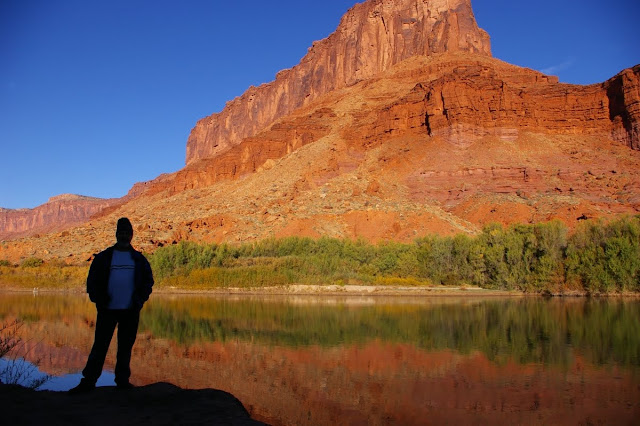
Colorado River near Moab, Utah
Showing posts with label the 60s. Show all posts

Wednesday, January 25, 2012

The Vagabond Days

“And it’s a hitchhike a hundred miles. I’m a rag-a-muffin child.” – Paul Simon, Cloudy

There was a period of time in my life, roughly from 1967 through 1970, when hitchhiking was my primary method of covering any great distance. I didn’t own a car. I had very little money. And the kids of my generation were taking up the gauntlet of Jack Kerouac and going “on the road”. For me, at first, it was just short hops in and around the friendly suburbs of the San Francisco peninsula. Usually I was trying to get to Cupertino from Mountain View to link up with my then girlfriend Nina. Sometimes I would luck out and get offered a joint by the driver. Or sometimes I would do the offering. In any event, it was a time of extreme trust and faith both from the driver and the passenger.

By 1970 I was living in Santa Cruz, getting by on mescaline and unemployment and getting around on an old bicycle. When the bike was stolen, it was pretty much back to using the old thumbs again. On a hitching hop down to Big Sur that summer I met a woman from Orange County. After our weekend interlude by the mighty Pacific, I became a regular roadside vagabond covering the several hundred miles between Santa Cruz and La Habra at least half a dozen times that year. Sometimes I’d get lucky and get a through ride nearly the full distance, but often it was just short hops from one freeway overpass to another….from Santa Cruz to Watsonville, Ventura to Oxnard. And the urban milieu of the L.A. basin could be positively frightening.

Nevertheless, love drove me onward. Once in a while a trucker would pick me up. One time I was picked up by a business man type who wanted to show me pornographic comics. Another time I got picked up by a fellow who called himself “Honda John” and shared some good weed with me while he ranted about his no-good girlfriend. Several times I was left by the side of the road in the most hopeless of circumstances. Yet I would always eventually get a ride.

And now that I’m older, I think about all the things that could have gone wrong. All the rides that could have ended in disaster. I remember that when the Manson murders made the headlines, it became much harder to get picked up…much harder to try and telegraph a peaceful and benign countenance to the hundreds of cars zooming by along the Coast Highway. Yet so very often, I put my faith completely in the hands of my fellow man.

I was lucky. And probably not very bright. But that yen for the open road and the peculiar kind of freedom that comes from having nothing and not knowing where the ride might end still bubbles up within me once in a while. It was truly the best of times and the worst of times.

Thursday, February 18, 2010

Taking Pescadero

By mid-November of 1963, the theme for the next big Los Altos High School dance had been established. The theme was going to have something to do with the sea; boats, underwater critters, fishing nets, etc. As lowly sophomores who probably wouldn’t get dates for the dance anyway, my friends and I took it upon ourselves to help provide decorations and some kind of coastal ambience. The plan was to drive over to the coast and steal a city limits sign from one of the quiet hamlets south of Half Moon Bay. The sign would end up in the high school gym as appropriate decor for the dance and we would be regaled for our resourcefulness.

On November 21, two days before the dance, we put our plan into motion. Four of us squeezed into Stan’s little Volkswagen bug and, late in the afternoon we headed over the winding, narrow road west of Crystal Springs Reservoir, up and over Skyline Boulevard, and down the curvy backside of the coast range past flower farms and nurseries to Half Moon Bay. From there it was a relatively straight shot south on Highway 1 to the town of Pescadero.

Pescadero had a special meaning for us because we liked to spend time poking around its rocky coastline and enjoying the maritime atmosphere. And, of course, the name was colorful and very coastal Californian. In any case, we reached the outskirts of Pescadero near sunset where we found the simple, green and white metal sign bearing the town’s name. Back in those days, it was fairly easy to make off with street signs like this one, attached to a pole as it were with only two bolts. With a handy wrench we made quick work of the hardware and, while one of us stood guard to make sure no traffic was in sight, the sign was removed and furtively thrown into the back seat of the bug.

You can probably guess the rest of this little story. The following day was November 22, 1963. I was at home that morning faking a head cold and watching television when the defining event of my generation occurred....the assassination of JFK. Needless to say, the big dance was cancelled. The Pescadero sign stood unused in my parents’ garage thereafter.

In subsequent years that sign moved with me and was often displayed in various parts of the American West....in the canyon country of Utah, at Point Reyes National Seashore, in backyards in Phoenix, Redding and Albuquerque, and many other locations my transient existence took me. And I still have it.

Last summer when I chanced to drive through Pescadero once again, I found it was as sleepy and bucolic as it had been back in the 1960s. The new city limits sign was much smaller and much more securely fastened to its post. And I found myself thinking that some day I would like to return to Pescadero, approach the city fathers (if there are any) with my story, seek forgiveness, and return the sign. It has been a part of my life now for nearly 50 years, so maybe it is time to take it back home.

Wednesday, February 10, 2010

Altamont:: Woodstock's Evil Twin

There was quite a brouhaha last summer over the 40th anniversary of Woodstock which occurred in August, 1969. But very little was mentioned about the event four months later which brought an abrupt end to the “Woodstock Nation.” I am speaking, of course, about the concert at Altamont on December 6, 1969. I missed out on the bliss and glory of Woodstock but I got to experience first hand the bad vibes and creepiness of Altamont.

The psychedelifiles in the audience will recall that after the unexpected serendipity of “three days of peace, love and music” in Bethel, New York, the idea of free concerts began to gain momentum across the country. The Rolling Stones jumped on the band wagon by proposing a free concert in the San Francisco area. Golden Gate Park was to be the original venue but the city fathers wisely voted thumbs down on that idea. So the Stones were forced to regroup and find another bay area location.

I’m still not sure why the month of December was chosen as this is a typically damp and gloomy period, even by California standards. And I’m not sure why the Altamont Speedway was chosen either. Altamont was no bucolic Bethel with nearby forests and lakes to frolic in. No, Altamont is located in the midst of some of the most burned up, overgrazed, barren country this side of Barstow. But the initial hype sounded pretty good with bands like Jefferson Airplane, Santana, the Grateful Dead and, of course, the Stones expected to show up.

At that particular time I was living only a few blocks from Golden Gate Park, sharing a tiny little house on Geary Street with three other guys as we all attended classes at San Francisco State College. By late November, our living arrangements and our academic careers were coming apart at the seams. So I spent most of my time at a lady friend’s house across the bay in a really seedy section of Oakland. The idea of a free concert seemed like a little ray of positive energy in what was turning into a downbeat cycle of my life. Besides, I was a huge Grateful Dead fan so there was little thought of not going.

On the morning of the concert Elizabeth and I left Oakland in a cold darkness, and headed east to find this “Altamont”. On the way out, we smoked a little dope and ate a little mescaline as a preparatory measure. Less than forty minutes later, we could see the traffic funneling off of the freeway into uninhabited terrain. We followed suit. At this point, people were just parking wherever they could and then walking. Toward what I wasn’t sure. But we fell right in line.

And we walked. And walked. And walked.

For perhaps two miles or more, we walked....over dried grass, bleached cow bones, and dried manure. We followed the hordes over hill and dale until we peaked out on the bowl like rim of the Altamont Speedway where several thousand people had already gathered. We found a place up on the edge of the crowd and just hung out, getting high and waiting for the music to begin. I’m not sure what else we did to pass the time but I do remember a kind of sinister pall that seemed to hang over the event.

Eventually the music started. I remember when Santana came on stage. I could barely see them through the my camera’s 300mm telephoto lens, but I could hear them. The trouble really began during Jefferson Airplane’s set when there was obviously some kind of scuffling going on down near the stage. Singer Marty Balin got decked by a Hells Angel and the band quit early. The Grateful Dead refused to even play.

Those of us up in the nosebleed seats knew that something was going terribly wrong down below but we didn’t know exactly what. But if ever the term “bad vibes” meant anything, the mood of the concert embodied it. Elizabeth and I decided to leave just as darkness was settling in and the Stones were taking the stage. By that time it didn’t matter and we knew we had a long walk back to the car. It was probably a day or two later that I learned of the murder of one poor soul down near the stage. A profound disappointment all around and a sober death to the 1960s.

Fortunately for me, I was able to move forward taking more of the spirit of Woodstock with me than the disillusionment of Altamont.