Ruminations From the Western Slope

Ruminations From the Western Slope
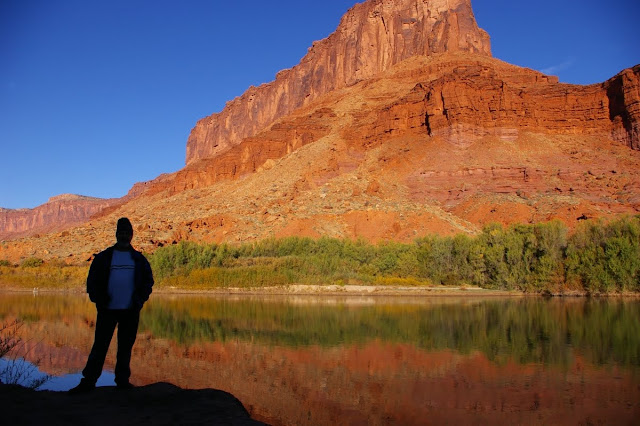
Colorado River near Moab, Utah

Friday, February 24, 2012

Who Knows Where the Time Goes?

Last night’s Judy Collins concert at the Avalon was, for me, another one of life's little connecting consequences that bring us from one point to another. The last time I saw Ms. Collins in concert was when I snapped this photograph of her on February 14, 1969 somewhere in the San Jose area. I was not yet twenty-two and she was probably in her late 20s at that time having just released the "Who Knows Where the Time Goes?" LP. At that time the chances are that I was without a source of income of any kind, had very long hair, and was high on something. And, of course, I was stoked on this beautiful woman folk singer who, just months before, had unwittingly gotten me through a bad acid trip.

That previous summer my friend Stan and I had elected to drop some acid at his house while his folks were gone for the weekend. Stan had done the deed first by himself and then, in a fit of anxiety, had called me up to come over and help him through it. But by the time I got to his house, Stan was pretty much in control of things again. Nevertheless, wanting to share in his experience, I decided that I should drop too. So I did. And at first it was pretty wild and fun. But after the fun and games subsided, the anxiety set in and the walls of his house started to close in on me and I was well on my way into a bad trip. Things seemed sinister and strange and I got to feeling even worse. So the two of us repaired to Stan's backyard.

That helped a little bit, but what really got me through the ordeal was shortly thereafter when we came back into the house, turned on the TV, and the Smothers Brothers' replacement summer show with Glen Campbell was on. Judy Collins was the featured guest. She came out all dressed in white and started singing Joni Mitchell's Chelsea Morning and, at that moment, it was the most beautiful thing I had ever heard. And I completely put my anxiety and fear aside, and was just riveted to the music and the lovely sight of this woman singing out with all her heart. From then on, the rest of the evening went really well and I always felt thereafter that she had somehow gotten me through my bad trip.

So there we were last night in the old Avalon Theatre, the very same place where thirty-five years earlier I saw Star Wars for the first time as a young backcountry ranger from Canyonlands. And I had seen this same woman almost forty-three years earlier to the day, singing on a cool February night in the Bay Area. She broke into song and her voice reverberated through that classic edifice of Grand Junction and I was immediately thrown into a veritable maelstrom of thoughts, remembrances, and heartfelt emotions. Her hair is all gray now, of course, but she still wears it long, and still has that strong, incredible voice that somehow pulls together all those years and all of those changes.

And she has connections too. She grew up in Denver. Came over to Grand Junction with her folks as a child to buy fresh fruit for her mother to can. So I sat there like some cosmic observer, trying to fit all the pieces together and feeling a kind of peace and perspective, and a warm re-visitation of the past. In this day and age, it seems more and more like these kinds of connections are what really count for me. These strands of memory and experience and relationship that are all tied together somehow mean so much more to me than the day-to-day meaningless media drivel of fear, anger and despair.

When we walked back out into the cool February air of western Colorado I was once again reinforced as to why I am here and why I love this place so much. Money and time well spent, I would have to say.

Monday, February 20, 2012

A Shameless Plug

The older I get, the more fascination I seem to have for old paper or, as it is often referred to, ephemera. It started out with old books which I have collected for quite a long time. That interest grew to include pulp paperbacks which I have expounded upon in a previous blog. But now I find myself inundated in vintage magazines, postcards, train schedules, posters, old catalogs, ticket stubs, autographed photos, and dozens of other oddities from “back in the day”. I cannot really explain the interest other than the old saw that these pieces of paper are from “an older and simpler time.” That may or may not be true, nevertheless they are often quaint, artistic, and revealing of the social and cultural mores of the day.

For instance, a write-up in a 1924 Victor Record catalog says of a contemporary fox trot “light and graceful in style, incentives to good dancing but with enough jollity for the carefree sort.” A 1938 issue of The National Republic admonishes against “The Enemy Within Our Gates” (communists). A cover from a 1930s issue of Popular Mechanics shows fanciful aircraft of the future while the articles inside hint at the possibility of impending war. These are all time capsules of a sort and items that I find it hard to get rid of. Nevertheless, I have recently established a website - http://westslopebooks.ecrater.com - for just such a purpose. So if you are interested in the wonderful world of weird paper, you might want to check it out. You too could get hooked.

Wednesday, January 25, 2012

The Vagabond Days

“And it’s a hitchhike a hundred miles. I’m a rag-a-muffin child.” – Paul Simon, Cloudy

There was a period of time in my life, roughly from 1967 through 1970, when hitchhiking was my primary method of covering any great distance. I didn’t own a car. I had very little money. And the kids of my generation were taking up the gauntlet of Jack Kerouac and going “on the road”. For me, at first, it was just short hops in and around the friendly suburbs of the San Francisco peninsula. Usually I was trying to get to Cupertino from Mountain View to link up with my then girlfriend Nina. Sometimes I would luck out and get offered a joint by the driver. Or sometimes I would do the offering. In any event, it was a time of extreme trust and faith both from the driver and the passenger.

By 1970 I was living in Santa Cruz, getting by on mescaline and unemployment and getting around on an old bicycle. When the bike was stolen, it was pretty much back to using the old thumbs again. On a hitching hop down to Big Sur that summer I met a woman from Orange County. After our weekend interlude by the mighty Pacific, I became a regular roadside vagabond covering the several hundred miles between Santa Cruz and La Habra at least half a dozen times that year. Sometimes I’d get lucky and get a through ride nearly the full distance, but often it was just short hops from one freeway overpass to another….from Santa Cruz to Watsonville, Ventura to Oxnard. And the urban milieu of the L.A. basin could be positively frightening.

Nevertheless, love drove me onward. Once in a while a trucker would pick me up. One time I was picked up by a business man type who wanted to show me pornographic comics. Another time I got picked up by a fellow who called himself “Honda John” and shared some good weed with me while he ranted about his no-good girlfriend. Several times I was left by the side of the road in the most hopeless of circumstances. Yet I would always eventually get a ride.

And now that I’m older, I think about all the things that could have gone wrong. All the rides that could have ended in disaster. I remember that when the Manson murders made the headlines, it became much harder to get picked up…much harder to try and telegraph a peaceful and benign countenance to the hundreds of cars zooming by along the Coast Highway. Yet so very often, I put my faith completely in the hands of my fellow man.

I was lucky. And probably not very bright. But that yen for the open road and the peculiar kind of freedom that comes from having nothing and not knowing where the ride might end still bubbles up within me once in a while. It was truly the best of times and the worst of times.

Monday, January 23, 2012

IN A CLASS BY OURSELVES

Reprinted From The Fruita Times, Feb. 26, 2009

Just about anyone who spends any time at all on the internet has inevitably been contacted by Classmates.com, an insidious site whose alleged goal is to “reunite” you with all those people you could never stand in high school. It’s a clever ploy that irresistibly appeals to one’s sense of morbid curiosity. Anyone can go to the site for free and look up names from their high school days, and even leave a personal profile as I dutifully did. I was never particularly close to most of my fellow high school graduates except for the two or three friends that I still have to this day. Nevertheless, I was fascinated at seeing the names of people I shared part of my past with. I figured I would just leave it at that.

The hook to all of this, of course, is that someone from that checkered past eventually leaves a message for you at the site. And in order to read said message, one has to procure a membership for a small fee. Lo and behold, I was soon contacted by a few people that I had some interest in hearing from so I went with the low-ball, temporary 90-day membership at a whopping $15. Nothing ventured, nothing gained.

For awhile I was caught up in the novelty of hearing from fellow classmates whom I barely knew, generally saying “hi, how are you? How have you been these past 40 years?” Usually, I’d get a similar terse response and after one or two short emails where we’d convince each other that we were both, in fact, alright and alive, the correspondence would cease. Until I got a message from David H.

David H. was a guy I probably said five words to in the entire four years we went through high school together. A big, affable guy with a ready smile, red hair and freckles, he was the sort of person who, like myself, blended seamlessly into the student body. But his message for me was a big surprise. First, he reminded me that he’d sat a few desks behind me in English class, and that he really admired my friends and I for all the crazy stuff we did at the time. “You guys were heroes to some of us” was what he said.

The “heroes” that he referred to I would more charitably call “dorks”. We hung out together because no one else would have us. We were the bottom-feeders of the Class of ’65 who made snide remarks in the back of the room, published a home-made magazine that made fun of the school, and went to weird midnight movies at the local cinema. Mostly we did all of this as a matter of survival in an upper-middle class school that had little patience for our brand of humor. But for David H. and his friends we were role models.

This admission came as a complete shock to me, so I pursued it further with Dave. And soon enough we were writing long emails to each other, ruminating over our perceptions of high school and growing up in general in suburban, white-bread America. I could see that I was dealing with someone who was articulate, funny, and perceptive. And I began to feel badly that we somehow had not connected way back when. From being excluded ourselves as dorks, our little clique had itself excluded others. It was a revelation to me.

As fate would have it, I was planning a trip back to California last summer and knowing I would be in the general vicinity, I suggested that Dave and I meet somewhere for a cup of coffee and a chat about the good old days. So we arranged to meet at a small café in Auburn, a quaint old gold-rush era town in the Sierra Nevada foothills east of Sacramento. It was a smoky morning in July and wildfires were sweeping through the neighboring valleys but I arrived early at the café and waited apprehensively for the big meeting.

Within ten minutes I heard the roar of a Harley as Dave H. pulled into town, pony-tailed red hair tied back with a scarf, auburn beard, and leather vest. He strode right up to me and gave me a big hug, then we sat down to reminisce. It was an oddly satisfying experience, meeting this nearly-total stranger who had just happened to have shared the hallowed halls and hollows of high school with me for four years back in a time when America was on the brink of a social and cultural revolution. I felt like we had known each other for years.

Time seemed to fly by as we engaged in a long, stream-of-consciousness dialogue that covered our school days, our careers, our families, our escapades in the 60s, just to name a few topics. After nearly three hours, we finally said our goodbyes and went our separate ways. But as I headed back on to the Interstate and into the scurrying, sea of humanity in the San Francisco bay area I reflected mightily on what had just occurred. I had connected, or perhaps re-connected, with another human being who had shared many of the same triumphs and tragedies that I had during my life. We had shared a real commonality of purpose, experience, thought. Both of us had risked meeting some one new and sharing quite a bit of ourselves in order to forge a new friendship out of remnants of a shared past.

To this day, Dave H. and I still communicate with each other and we look forward to meeting again with our respective families in tow. And all of this was an unexpected outcome of being harassed by an internet site until my curiosity got the best of me. Curiosity may sometimes “kill the cat” but it can often lead to the most unexpected and gratifying ends.

Monday, November 28, 2011

Remembering the Creek

Shortly after my folks moved to suburban Mountain View in the fall of 1954, Permanente Creek became my avenue into the wild. It flowed intermittently past the end of my street at the junction of Lloyd Way and Ernestine Avenue, and through a short tunnel under Mountain View Avenue. West of the tunnel, its forested banks wound sinuously toward the creek’s source somewhere in the coastal hills behind Los Altos. East of the tunnel it reflected an increasingly urban landscape. Lined with backyard tract home fences, its battered slopes held fewer trees and more boxes of trash, piles of grass clippings, and a panoply of indiscriminately dumped items from old bicycle parts to well-used girlie magazines. For a ten year old child it was a paradise.

Throughout my pre-teen years, there was no better place to explore, hike or get lost in. Despite the rapid growth of neighborhoods up above, Permanente’s creek bed still maintained some vestiges of the natural history of the south bay. Some native trees still flourished among the eucalyptus and pepper trees. Poison oak often covered the more protected slopes. Occasionally I would find a dead tarantula or alligator lizards. It was not unusual for me to pack a lunch, take a friend, and drop into the creek for an all day journey. Its winding channel seldom had much water in it and was almost always easy to navigate. When I was twelve years old I even wrote a book about it called “My Adventures in Permanente Creek”. With a home-made press run of one copy, it was a runaway best seller.

Permanente Creek, along with Adobe, Arastradero and Stevens Creek, was considered an intermittent stream but periodically it could carry an enormous amount of runoff. Such was the case during the wet winter of 1958 when it actually overflowed at the Ernestine Avenue junction and sent a three-inch “wall of water” down our street. It was probably these isolated incidents that eventually sealed the creek’s doom.

During my college years I was in and out of Mountain View, immersed in the social and cultural upheaval, and not really paying attention to the changes going on in my old neighborhood. But some time during that time period Permanente Creek was dredged and channelized, its dirt banks shaved and completely covered in concrete. Furthermore, at the old Mountain View Avenue bridge a tall cyclone fence was erected to ensure no unauthorized entry into what was now a sterile channel…as if that glorified culvert could hold any intrigue or appeal to a young child anymore.

It is difficult to fathom the loss of an entire ecosystem that dwelt within the confines of Permanente Creek for perhaps thousands of years. But it is even more difficult to imagine the loss of adventure, excitement and mystery for curious kids like myself who now blend into the old neighborhood like the sidewalks and strip malls…who, with the proliferation of electronic media, iphones, computers, video games, probably don’t even care. But without Permanente Creek, I would likely not have found my calling as a park ranger and lover of western landscapes. The creek was my salvation even though in the end, I could not save it.

Tuesday, November 15, 2011

Boomer-Angst

“…and I don’t know who I am but, you know, life is for learnin’.” - Joni Mitchell, Woodstock


We baby boomers are an odd generation, born during the last great world conflict and conflicted ever since. I was born in 1947 when Robert Mitchum was filming Out of the Past and Humphrey Bogart was doing Dark Passage on the streets of San Francisco. I’m old enough to remember seeing Elvis Presley’s first TV appearance, catching the Beatles on Ed Sullivan, and watching the moon landing on a big screen in the Fillmore Auditorium while waiting for Country Joe and the Fish to start their first set. I grew up on the clean suburban streets of Mountain View before it was a part of the Silicon Valley. And walked the railroad tracks of the old Vasona Line before it morphed into the Foothill Expressway.

Look at me…this anomaly of the new millennia, listening to the Grateful Dead while nursing my arthritic joints. Working out at the gym between appointments with my chiropractor. Waxing nostalgic about the days of mushrooms and weed when the current drug of choice is Vicodin. I hobble into the future refusing to be beaten down, dancing to Fountains of Wayne and trying, in vain, to put the skids on Father Time. Behind me is the detritus of ex-lovers, broken marriages, old friends who didn’t make it, and a few lost opportunities. But also behind me are the years spent living in national parks, hiking and exploring the glorious American landscape, the raising of two beautiful children, and the opportunities captured.

When my grandfather was 65, he looked old. Suit clad and sedentary. I am nearly 65 but I still feel the beat, the energy, the vibe. My generation looks younger and keeps moving toward some indefinable goal, taking with it the broad perspective of the final half of the twentieth century. McCarthyism. Amos n’ Andy. Civil Rights. JFK. Duck and Cover Drills. Drive In Movies. Reagonomics. Space Shuttles. And a huge and diverse panoply of cultural iconic events. Seems like there is a lot more noise and confusion these days, and life keeps moving faster. But I am glad for when I was born, and that I can look back on a life well lived and never boring or taken for granted.

“No regrets, Coyote” – Joni again.

Wednesday, November 2, 2011

THE LAST HALLOWEEN

It was my idea for Lindsay to go out on Halloween for one last trick-or-treat fest. Not that she wasn’t agreeable to it, having a ready-made cat costume at hand and the ambivalence a fifteen year old would have at going door to door. But she readily agreed that we could do one “final farewell tour” through the old historic district of Grand Junction where the big, stately homes and the tall trees created an appropriate ambience for the evening. So after dinner we drove down to 7th Street and parked, and started walking.

There were already some small groups of kids wandering around, and we could hear the laughter and shouting in the cool October night. Many of the houses were dark and seemingly uninhabited, while others were well-lit and welcoming. Nearly all of them greeted us with wide wooden porches and weathered steps, and flickering jack-o-lanterns along the walkways.

I hung back on the sidewalk while Lindsay went up to each door. But I paid close attention to the fine old details of the craftsman style homes with their broad open beamed front rooms, built-in bookcases, brick fireplaces and dark dormer windows. Often there would be a staircase leading up to the second floor, and amazing artifacts on shelves. Some of the homes still seemed locked in time with ancient hosts and hostesses come to the door. Others were obviously rentals with college kids and young families inside. But all of them together on those old broad streets created a kind of old-fashioned sense of community and caring. A small glimpse of Edwardian Americana come alive for one night.

I know that Lindsay tagged along primarily for my sake. She knew how much I savored those deep feelings of something nearly lost. And she could see me harkening back to my own childhood in California suburbia when the Halloween streets were rife with kids and costumes and a soon-to-be lost innocence. And she and I both knew that this might be the last time we would share in this fading fall ritual. So we soldiered on for several blocks in an unspoken alliance of magic and memory.