Ruminations From the Western Slope

Ruminations From the Western Slope
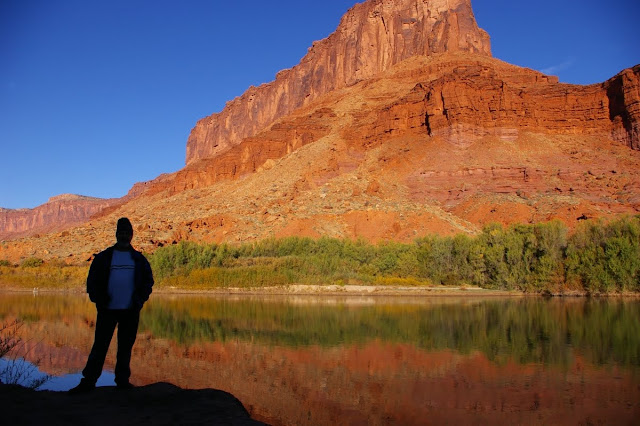
Colorado River near Moab, Utah

Thursday, February 18, 2010

Taking Pescadero

By mid-November of 1963, the theme for the next big Los Altos High School dance had been established. The theme was going to have something to do with the sea; boats, underwater critters, fishing nets, etc. As lowly sophomores who probably wouldn’t get dates for the dance anyway, my friends and I took it upon ourselves to help provide decorations and some kind of coastal ambience. The plan was to drive over to the coast and steal a city limits sign from one of the quiet hamlets south of Half Moon Bay. The sign would end up in the high school gym as appropriate decor for the dance and we would be regaled for our resourcefulness.

On November 21, two days before the dance, we put our plan into motion. Four of us squeezed into Stan’s little Volkswagen bug and, late in the afternoon we headed over the winding, narrow road west of Crystal Springs Reservoir, up and over Skyline Boulevard, and down the curvy backside of the coast range past flower farms and nurseries to Half Moon Bay. From there it was a relatively straight shot south on Highway 1 to the town of Pescadero.

Pescadero had a special meaning for us because we liked to spend time poking around its rocky coastline and enjoying the maritime atmosphere. And, of course, the name was colorful and very coastal Californian. In any case, we reached the outskirts of Pescadero near sunset where we found the simple, green and white metal sign bearing the town’s name. Back in those days, it was fairly easy to make off with street signs like this one, attached to a pole as it were with only two bolts. With a handy wrench we made quick work of the hardware and, while one of us stood guard to make sure no traffic was in sight, the sign was removed and furtively thrown into the back seat of the bug.

You can probably guess the rest of this little story. The following day was November 22, 1963. I was at home that morning faking a head cold and watching television when the defining event of my generation occurred....the assassination of JFK. Needless to say, the big dance was cancelled. The Pescadero sign stood unused in my parents’ garage thereafter.

In subsequent years that sign moved with me and was often displayed in various parts of the American West....in the canyon country of Utah, at Point Reyes National Seashore, in backyards in Phoenix, Redding and Albuquerque, and many other locations my transient existence took me. And I still have it.

Last summer when I chanced to drive through Pescadero once again, I found it was as sleepy and bucolic as it had been back in the 1960s. The new city limits sign was much smaller and much more securely fastened to its post. And I found myself thinking that some day I would like to return to Pescadero, approach the city fathers (if there are any) with my story, seek forgiveness, and return the sign. It has been a part of my life now for nearly 50 years, so maybe it is time to take it back home.

Tuesday, February 16, 2010

Silence: A Vanishing Resource

I didn’t grow up in a particularly quiet environment, but it wasn’t a particularly noisy one either. Just a normal, suburban street in Mountain View, California, not too far from the main drag of El Camino Real and safe enough to play ball in or roller skate on or ride along hands-free on my bicycle. I never gave much thought to decibel levels or ambient noise until I experienced the absence of it. That probably happened when I started camping out, but it really happened when I became a park ranger and took up residence in a national park.

That first deep winter night alone in my cabin at Pinnacles National Monument was eerily still. No cars. No airplanes. No television or radio. At first, the slightest rustle in the bushes was a startling event. A midnight squabble between two raccoons was frightening....until I got used to it. Used to the natural rhythms and soft sounds out there beyond my door. It was never complete silence but it was a natural one.

For the next fifteen years, with some minor exceptions, I was blessed with quietude. Especially when I moved to the canyon country in 1974. At Canyonlands National Park, there was silence during the day as well as the night. Sitting alone in Lost Canyon, I would be suddenly surprised by the wing beats of a raven overhead. I could hear a leaf gently falling from a cottonwood tree. Water dripping from a sandstone seep. And when I really concentrated, it seemed as if I could pick up on the constant drone of things growing. The sound of life itself. Sometimes it was a little intimidating to feel the weight of so much raw wilderness pressing against me. But I grew to love it. I got spoiled by the silence.

At Point Reyes National Seashore, the thick fog would roll in and cloak everything in its pillowy grip, muffling sounds from the sea and shoreline. Only the rutting cry of the tule elk in autumn could break through that blanket.

As my career became more urban and I moved in and out of places like Phoenix, Albuquerque, and Las Vegas I quickly realized what I had lost. Barking dogs and boom boxes became the bane of my existence. Elevator music in super markets. Chain saws on a Saturday afternoon. White noise from the freeways. And, worst of all, blaring radios in campgrounds. I could not, at first, understand why someone would come out to a campground to ostensibly experience the great outdoors, and then turn their radio up full blast.

I finally realized that, for most people, silence is not golden. It is scary. The absence of noise to a person raised on television, traffic, and telephones can be seriously disorienting. We spend so much time with some kind of constant cacophony as a soundtrack to our lives that when it suddenly ceases, a little bit of that primordial fear can set in.

But I got used to that deep and abiding silence. And I miss it everyday. And like a mole, I keep the lights dim and pad around the house in the early morning and revel in a world not quite yet awake. And when I get back into those stony canyons, I can still appreciate those little pockets of silence that punctuate an otherwise hectic life. The silence is getting harder to find and in some places is in full retreat. But for those who seek it out, it can be a resource as good as gold.

Wednesday, February 10, 2010

Altamont:: Woodstock's Evil Twin

There was quite a brouhaha last summer over the 40th anniversary of Woodstock which occurred in August, 1969. But very little was mentioned about the event four months later which brought an abrupt end to the “Woodstock Nation.” I am speaking, of course, about the concert at Altamont on December 6, 1969. I missed out on the bliss and glory of Woodstock but I got to experience first hand the bad vibes and creepiness of Altamont.

The psychedelifiles in the audience will recall that after the unexpected serendipity of “three days of peace, love and music” in Bethel, New York, the idea of free concerts began to gain momentum across the country. The Rolling Stones jumped on the band wagon by proposing a free concert in the San Francisco area. Golden Gate Park was to be the original venue but the city fathers wisely voted thumbs down on that idea. So the Stones were forced to regroup and find another bay area location.

I’m still not sure why the month of December was chosen as this is a typically damp and gloomy period, even by California standards. And I’m not sure why the Altamont Speedway was chosen either. Altamont was no bucolic Bethel with nearby forests and lakes to frolic in. No, Altamont is located in the midst of some of the most burned up, overgrazed, barren country this side of Barstow. But the initial hype sounded pretty good with bands like Jefferson Airplane, Santana, the Grateful Dead and, of course, the Stones expected to show up.

At that particular time I was living only a few blocks from Golden Gate Park, sharing a tiny little house on Geary Street with three other guys as we all attended classes at San Francisco State College. By late November, our living arrangements and our academic careers were coming apart at the seams. So I spent most of my time at a lady friend’s house across the bay in a really seedy section of Oakland. The idea of a free concert seemed like a little ray of positive energy in what was turning into a downbeat cycle of my life. Besides, I was a huge Grateful Dead fan so there was little thought of not going.

On the morning of the concert Elizabeth and I left Oakland in a cold darkness, and headed east to find this “Altamont”. On the way out, we smoked a little dope and ate a little mescaline as a preparatory measure. Less than forty minutes later, we could see the traffic funneling off of the freeway into uninhabited terrain. We followed suit. At this point, people were just parking wherever they could and then walking. Toward what I wasn’t sure. But we fell right in line.

And we walked. And walked. And walked.

For perhaps two miles or more, we walked....over dried grass, bleached cow bones, and dried manure. We followed the hordes over hill and dale until we peaked out on the bowl like rim of the Altamont Speedway where several thousand people had already gathered. We found a place up on the edge of the crowd and just hung out, getting high and waiting for the music to begin. I’m not sure what else we did to pass the time but I do remember a kind of sinister pall that seemed to hang over the event.

Eventually the music started. I remember when Santana came on stage. I could barely see them through the my camera’s 300mm telephoto lens, but I could hear them. The trouble really began during Jefferson Airplane’s set when there was obviously some kind of scuffling going on down near the stage. Singer Marty Balin got decked by a Hells Angel and the band quit early. The Grateful Dead refused to even play.

Those of us up in the nosebleed seats knew that something was going terribly wrong down below but we didn’t know exactly what. But if ever the term “bad vibes” meant anything, the mood of the concert embodied it. Elizabeth and I decided to leave just as darkness was settling in and the Stones were taking the stage. By that time it didn’t matter and we knew we had a long walk back to the car. It was probably a day or two later that I learned of the murder of one poor soul down near the stage. A profound disappointment all around and a sober death to the 1960s.

Fortunately for me, I was able to move forward taking more of the spirit of Woodstock with me than the disillusionment of Altamont.

Saturday, February 6, 2010

A River Reminiscence


If there really is a heaven somewhere I hope it looks and feels like Ruby Canyon did that late October day back in 2003. There were three of us on a raft drifting in a dreamlike state through still water; through a corridor of gold and gray and red; sharing the stream with herons, ducks and eagles; and reveling in the heat of a record-breaking late October afternoon. This might have been my best day ever on the river, my moment of spiritual and emotional glory, and the summation of all the personal energy, time, romance and feeling that I have brought into this country and which this country has returned to me a hundred-fold.

We cast off from Loma launch around 9:30am, a bit late by river standards but early enough that much of Horsethief Canyon was still in shadows and as the sun crept into the cottonwood galleries, they would ignite with an almost holy luminescence like torches lighting the way through this watery corridor. Ahead of us, the upper cliffs and buttes were bright with morning light while the canyon mouths waited in cool darkness. A few miles downstream we stopped at the mouth of Rattlesnake Canyon where we exited the raft, and followed the primitive trail up-canyon in search of slickrock. Every turn in the trail brought some new delight. A fresh view. A blazing red squawbush. An eroded alcove. Giant monolithic structures. We soon reached a stony corridor which was still in the shade, a beautifully sculpted section of creek where the gravel and soil had long since been removed, leaving a slickrock staircase through narrow walls. We hung out there for quite a while before returning to the raft.

By then it was nearly noon and we had barely begun the trip. So we pressed on downstream, skirting riffles and eddies, amazed and humbled by the steadily rising cliffs. I sat at the front of the raft, taking it all in, trying to somehow imprint the landscape on my brain, knowing that this could be the last trip I take on the river for quite some time. A float trip always has its own time schedule. The current dictates where you go and how fast you get there. No point in worrying about a time schedule. The scenery slides by at a slow pace massaging the senses as it does. Your eyes fix on a point downstream and that point approaches at an even, minimal pace allowing you to study it, anticipate it, dissect it if need be. The immediate banks of the river move by like the old multi-plane animations of Walt Disney. A cottonwood looms ahead. The view of it then replaced by rising tamarisk. Then a butte rises up from nowhere. And then, in a single instant butte, cottonwood, and tamarisk are all framed exquisitely to the human eye. This is the recurring cycle of floating downstream.

We took a late lunch on the Mee Canyon Bench which was rife with autumn-heavy trees offering shade while framing the surrounding cliffs with great, arching branches and sweeping canopies. We marveled at the absence of any other people. No other floaters. No trains coming through. No hikers. Not even any airplane noise. I fell into deep reminiscence as I sat beneath a mother cottonwood eating my lunch. I thought about Octobers past. I mentally walked myself though all the trails walked, and mesas climbed, and arroyos explored in my thirty-odd years out here. How much sand had accumulated in my shoes? How much red dust in my teeth? How many friends had I taken with me? I felt like I knew so much yet still knew so little about this place, but I felt a peace and comfort verging on nirvana. I felt my life coming full circle in canyon country.

It was after two by the time we got back on the river and now the sun had drifted substantially to the west, sending long shadows across the rocks. As we navigated the whirlpools and rough water of Black Rocks, the Precambrian, polished stone captured and reflected the afternoon light. The rocks loomed out of the water like thick, black icebergs as we moved through the narrow, foam-flecked channel. As we headed west into the sunlight itself, I basked in the heat and the deep blue sky above. In a few more miles, we would transition from the inner depths of Ruby Canyon to the more open shorelines near the Utah/Colorado border.

As soon as one reaches the state line, the river breaks free of the canyon's constraints and enters a broad, brilliant country of free standing buttes, open fields, and thickening cottonwood galleries. With the sun now behind them, the trees were afire with yellow and orange. Along the banks, the squawbush glowed red, while the thick tamarisk stands were haloed in a coppery glow. The overall feeling was one of leaving a great cathedral and ascending to the very portals of a heavenly landscape. Not a single mile was lost on my senses. I drank it in. I stored it. I reveled in it. And I silently congratulated myself for knowing when to take this trip. For having the experience and foresight to time it so perfectly. And I thanked the canyon gods for cooperating with great weather, great colors and great companionship. That day on the river was a distillation of all the Octobers ever spent on the Colorado Plateau, a concentrated dose of all the best this land can offer. I never tire of it. I never fail to be renewed by it. I have a canyon lands dependency.

Sunday, January 31, 2010

Get Off the Pot

When is America going to grow up as far as marijuana is concerned? It seems like we’ve been running around and around this issue since the 1960s. What happened to all that talk of legalization back in 1967? Here it is over 40 years later with lots more evidence to support that path and we are still arguing about it. There are still people out there whose reference point for smoking pot is the movie Reefer Madness, that great exploitation scare film from the 1930s. It must have worked because it seems we are no closer now then we were back then. Except, of course, medical marijuana. And even that is facing a state by state battle. While you can access medical marijuana here in Colorado, it is still a federal crime to possess it!

So let’s look at the scary after effects as related by yours truly. My first real high from grass came on a geology class field course back in 1967. It was the spring equinox and our bus group was camped in what was then a group campground (now a picnic area for Weeping Rock) in the heart of Zion Canyon, Utah. My new friend Duncan, an ex-biker, had a little matchbox full of weed and a small pipe to go with it. While the rest of the class sat around that evening’s campfire singing Kumbaya, Duncan and I were off on the fringes “getting nice”.

I wasn’t sure it would take but, in no time at all, I was laughing hysterically at Duncan’s imitation of Bela Lugosi singing So You Want to Be a Rock n Roll Star, the then hit by the Byrds. I thought it was funnier n’ hell, a good indication that I was not in my right mind. Later that evening, I got hung up at staring at nearly full moon rising over the Great White Throne. I knew then that a) I would have to return to the southwest, and b) I couldn’t wait to get home and get high with a little help from my friends.

In any case, time passed. I spent the next four years getting high very often. I joined the park service in 1971 and became a “fed” and the smoking issues began to slowly fade away with only intermittent use into the 80s. Since then I have gotten married (twice), become a father (twice), bought six houses in four different states, became a park manager, served as the director of a board, held several other positions of moderate responsibility, and retired with a comfortable salary. The after effects of all that pot smoking have certainly been insidious indeed.

Of course, it all boils down to personal responsibility and addictive personalities. Same as tobacco or alcohol. Meanwhile the US guvmint continues to pour millions of dollars a year into curbing the marijuana trade. Fellas, can we redirect that money somewhere else where it might do some more good? Like child welfare or helping homeless animals? Or paying down our national debt? Convert all those narcs to park rangers and let them get out and smell the real grass. It just might mellow them out a bit and sharpen their perspective.

Saturday, January 30, 2010

The Pulps


When I lived in Redding, California in the early 90s, I frequented Cal’s, a used bookstore ensconced in an old warehouse south of town on old Highway 99. Old Cal had pretty much retired from the business and left as his charge a young, hip fellow named Steve to more-or-less run the place. The cavernous building held thousands of books and ephemera, most of it organized and shelved from floor to ceiling. Also included were bins of old vinyl, comic books, and an herbal store in the back....a rather eclectic and hip little establishment.

There was also a large loft where dozens of boxes of uncatalogued titles were strewn about. Due to safety issues with the loft, they were largely unavailable to the public. But one quiet Sunday morning I showed up early, and Steve allowed me to climb the wooden ladder and hang out in the loft for awhile as long as I kept a low profile. That was pretty easy that morning as no one else was in the shop. Steve had the Grateful Dead playing on the sound system while I scurried up the ladder into no-man’s land.

What awaited me there was a wonderful world of pulp. Hundreds of paperbacks from the 1940s and 50s. Dell, Avon, Popular Library, Bantam, Ace, Pocket Books......an endless array of racy covers and lurid texts. As I sat amid the piles of paper, I was transported back to another time and place, smelling the musty odors and feeling the tactile old paper beneath my fingers. In no time at all, I had loaded up with several dozen titles which I bought for $2 a piece.

Not long after that, when I got a hold of a price guide, I found out just how valuable some of those titles had become, and thus a great and rewarding hobby was born. I learned about how some of the paperbacks were valuable because of the cover art; others because of the authors which might include the more well-known pulp writers such as Dashiell Hammett, Raymond Chandler and Ellery Queen. But also the cult favorites like Cornell Woolrich, David Goodis and Jim Thompson.

Apparently some one else got a hold of that price guide as well because when I returned to Cal’s some months later, the pulp titles had been all sorted, shelved and were priced appropriately. Some one had figured it out. Since that time however, I have acquired well over a thousand titles through yard sales, online auction sites, library sales. And I still get a good deal once in awhile. And I still get a thrill out of a really great find. I cannot really explain the appeal of these aged books that originally sold for 25 cents and were never meant to be sophisticated entertainment. But they capture an era and a feeling for the pop culture of the time. And they are little works of art in themselves.

Wednesday, January 27, 2010

Bridging the Years

My first encounter with the Dewey Bridge was just before Christmas of 1974. As a young park ranger, I had moved to the Needles District of Canyonlands just two months earlier. Awed and slightly intimidated by the remoteness, I quickly adapted to the 160 mile round-trip drive to and from Moab, Utah to buy groceries, pickup mail, make phone calls, and mingle with humanity a bit. At that time, the Atlas Uranium Mill was in the process of shutting down and Moab was a depressed area. People were actually moving away and the population hovered around 4,000.

Services were limited. No liquor, of course (this was still a Mormon town). No book stores, clothing stores, record stores. There was a small Sears Catalog store across the street from the post office where I once ordered a Super 8 film projector so that I could show old movies back in the District. Most everyone I knew said that to do any real shopping, I’d have to go to Grand Junction, Colorado, another 100 miles up the road.

And the best way to do that was to take Utah Highway 128, the River Road. When I discovered the River Road, I discovered a road into my soul. Back then it was a narrow, partially paved ledge that meandered along the banks of the Colorado River, flanked by high red walls of Wingate sandstone, breaking out occasionally into small valleys like the Professor Valley where Fisher Towers, Castle Rock and other stone monoliths stood guard along the edges.

Much of the road was still unpaved including the stream crossings at Onion Creek and Professor Creek where one simply splashed on through. And then, of course, about 28 miles east of Moab, there was the Dewey Bridge, a solid little wooden structure at a sharp bend in the road where a sign warned it was a one-way crossing. It was a narrow bridge even for my little 1973 Datsun pickup. But what an adventure for a boy from the bay area.

For four years I bonded with the River Road and always had a special sense of anticipation at crossing the Dewey Bridge. In 1985 a modern concrete bridge was constructed but the historic Dewey Bridge remained as a footbridge and a palpable reminder of a not-so-distant frontier past. When I returned to the area in 2001, I quickly re-established my relationship with the River Road and the old bridge.

In the spring of 2008, a young boy playing with matches downstream ignited the dry tamarisk along the river bank and the fire rapidly spread upstream where it took out the old bridge, leaving nothing but dangling cables and supports. There is talk of rebuilding it someday but it won’t be the same. Losing the bridge was like losing an old friend.